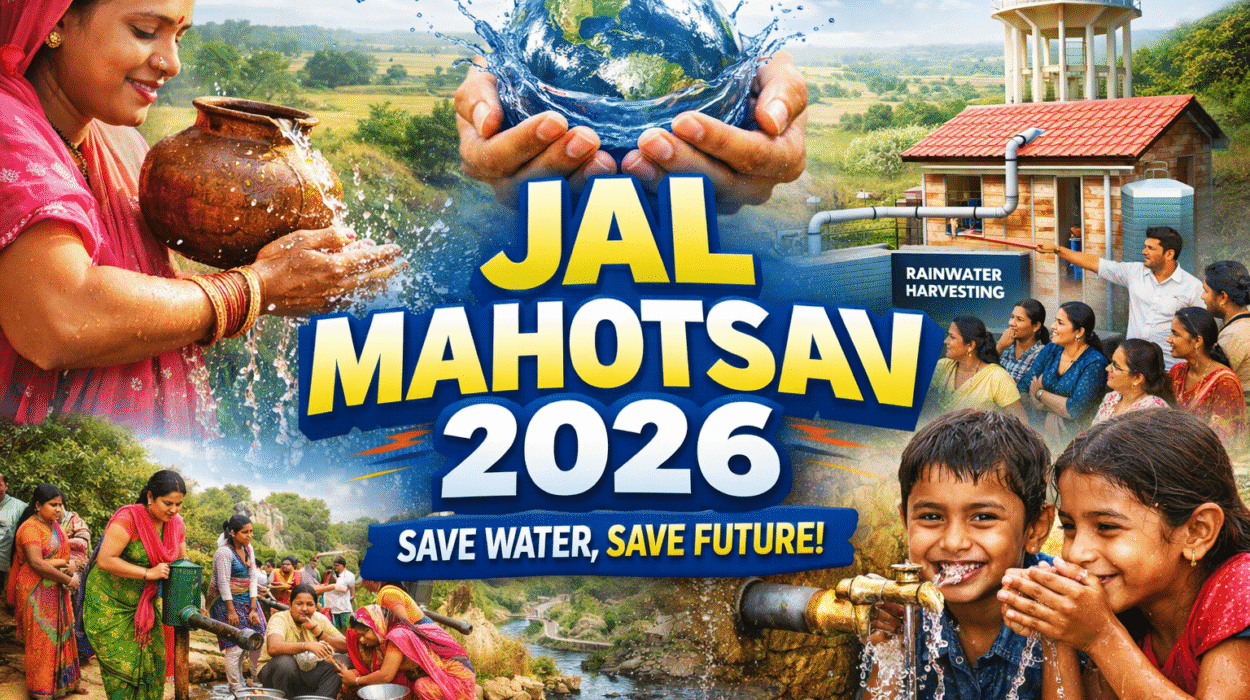
India is witnessing a major water awareness movement in 2026 with the launch of Jal Mahotsav 2026, a nationwide campaign aimed at promoting water conservation, community participation, and sustainable water management. At a time when climate change, groundwater depletion, and water scarcity are major concerns, Jal Mahotsav is becoming one of the most important environmental initiatives in the country.
The campaign connects villages, citizens, and governments in a collective effort to protect water resources and strengthen India’s rural drinking water systems.
What Is Jal Mahotsav 2026?
Jal Mahotsav 2026 is a nationwide awareness and community engagement campaign launched by India’s Ministry of Jal Shakti to encourage water conservation and strengthen community participation in rural water management. (thecsruniverse.com)
The initiative is organized under the Department of Drinking Water and Sanitation (DDWS) as part of broader national water programs such as the Jal Jeevan Mission, which aims to provide safe tap water to every rural household. (en.wikipedia.org)
Key Details
- Start Date: 8 March 2026
- End Date: 22 March 2026 (World Water Day)
- Theme: Community participation in water conservation
- Slogan: “गाँव का उत्सव, देश का महोत्सव”
- Organized by: Ministry of Jal Shakti
The campaign started with “Jal Arpan Diwas”, observed across the country to highlight the importance of responsible water use and conservation. (thecsruniverse.com)
Why Jal Mahotsav 2026 Is Significant
1. Tackling India’s Water Crisis
India is facing serious water stress in many regions. Jal Mahotsav aims to encourage citizens to adopt practices such as:
- Rainwater harvesting
- Protection of lakes and ponds
- Sustainable groundwater use
- Efficient water management in villages
The initiative promotes the vision of “Sujal Gram” (water-sufficient villages) and supports the long-term goal of building a “Viksit Bharat” (developed India). (drishtiias.com)
2. Strengthening Community Participation (Jan Bhagidari)
One of the biggest goals of Jal Mahotsav is to encourage people-led water governance.
Activities are organized at four levels:
- National level
- State level
- District level
- Gram Panchayat level
Local communities, Panchayats, and volunteers are encouraged to take ownership of rural drinking water systems. (thecsruniverse.com)
This approach ensures that water infrastructure created under government schemes remains sustainable and well maintained.
3. Empowering Women in Water Governance
A major highlight of Jal Mahotsav 2026 is the recognition of women’s leadership in water management.
Women from Self-Help Groups (SHGs), pump operators, and village water committees play a crucial role in managing rural water systems and ensuring safe drinking water supply. (Drishti IAS)
The campaign was launched on International Women’s Day, symbolizing the important role of women in water conservation and governance. (NewsOnAir)
4. Supporting the Jal Jeevan Mission
The festival also highlights the progress of the Jal Jeevan Mission, a flagship program launched in 2019 to provide tap water connections to rural households across India. (Wikipedia)
The mission has transformed rural life by:
- Improving health and sanitation
- Reducing the burden of water collection on women
- Enhancing the quality of life in villages
Jal Mahotsav acts as a public awareness extension of this mission.
Key Activities During Jal Mahotsav 2026
Across India, thousands of events are being organized during the festival, including:
Community Activities
- Jal Arpan ceremonies
- Village water meetings
- Water conservation pledges
Educational Programs
- Workshops on rainwater harvesting
- Training for village water committees
- Awareness campaigns in schools
Government Events
A National Mega Event at Vigyan Bhawan in New Delhi will recognize grassroots water leaders who have contributed significantly to water conservation efforts. (thecsruniverse.com)
Why Jal Mahotsav Matters for the Future
Water experts believe that community participation is the key to solving India’s water challenges.
Jal Mahotsav helps create:
- Awareness about water scarcity
- Local responsibility for water infrastructure
- Sustainable water management practices
By connecting citizens with government programs, the campaign encourages a people’s movement for water conservation.
Jal Mahotsav 2026 and the Vision of “Water Secure India”
The long-term goal of initiatives like Jal Mahotsav is to build a water-secure India, where every village has access to safe and sustainable drinking water.
If the campaign succeeds, it could lead to:
- Better groundwater recharge
- Increased rainwater harvesting
- Reduced water wastage
- Stronger rural infrastructure
Ultimately, Jal Mahotsav represents a national movement to protect India’s most valuable resource — water.